

A few weeks ago, I saw Jon’s video on Twitter and here’s my brainstorm/audit about things Bannerbear could try on YouTube.
Maybe this is a bit messier than my usual audits, and isn’t a full strategy, but I think there’s enough value here to explore and build a good foundation for the channel.
Focus the content on the main ICP
The first thing to point out is that the Bannerbear channel is too product-focused. That doesn’t work well on YouTube if the goal is to build an audience that wants to watch most of the videos.
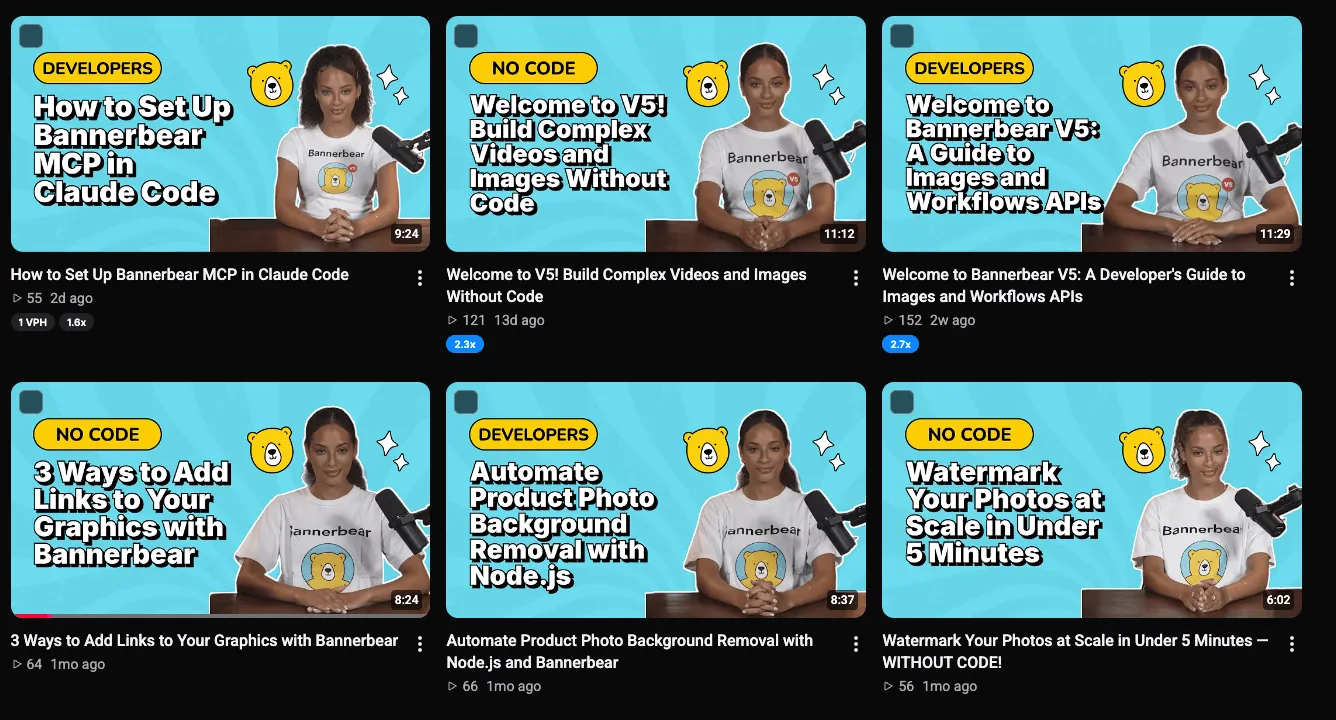
Videos like “How to Add Subtitles to a Video with FFmpeg” and “How to Automatically Generate Images with Bannerbear and Make (No Code)” are both about visual production, but serve different skills and interests.
There’s likely very little overlap between the audience that wants to watch those 2 videos.
I’m not saying product tutorials have no value, but making videos for different audiences and expecting them to watch most uploads is one of the mistakes I see businesses making on YouTube.
Look at VidIQ as a good example. They make videos about topics the audience cares about, like getting more views or monetizing a channel. They don’t just teach people how to use their software.
So, before implementing a content strategy, Bannerbear has a big decision on its hands, and I see 2 options:
- Change the direction of the current channel to focus on the audience instead of the product.
- Create a new channel focusing on the audience from the start. This channel could even have different branding, as beehiiv did with Creator Spotlight.
In my opinion, option 1 is better than starting a new channel. The current channel has some brand equity, and a new channel also has some risks.
Join for tips on growing a bussiness with video
Define the ICP and their desires
For this Bannerbear audit, the ICP I picked is marketing professionals who need to automate repetitive visual content production.
Note: This is an educated guess based on my research about the industry, including the content Bannerbear publishes on its blog. For example, the ICP could be slightly adapted to include agencies, as they repeat this work across clients. But let’s ignore agencies for simplicity’s sake.
Also, I’m avoiding developers as one of the main customers. This is in part because of vibe-coding and the tweets I’ve seen from Bannerbear’s founder.
It looks like the future direction of a tool like Bannerbear is to serve more no-code and low-code users, which is in line with their article about How to Pivot Your SaaS Company in the Age of AI.
So, the core job for this ICP is: Turn campaign inputs and data into branded visuals without making every asset by hand.
In plain language, the goals of this audience are:
- Make things faster;
- Reduce manual work;
- Keep branding consistent;
- Keep costs low by doing less manual work and using efficient tools.
Finding what works on YouTube
I researched outliers and title formulas to see what is working right now on YouTube before deciding what Bannerbear should publish.
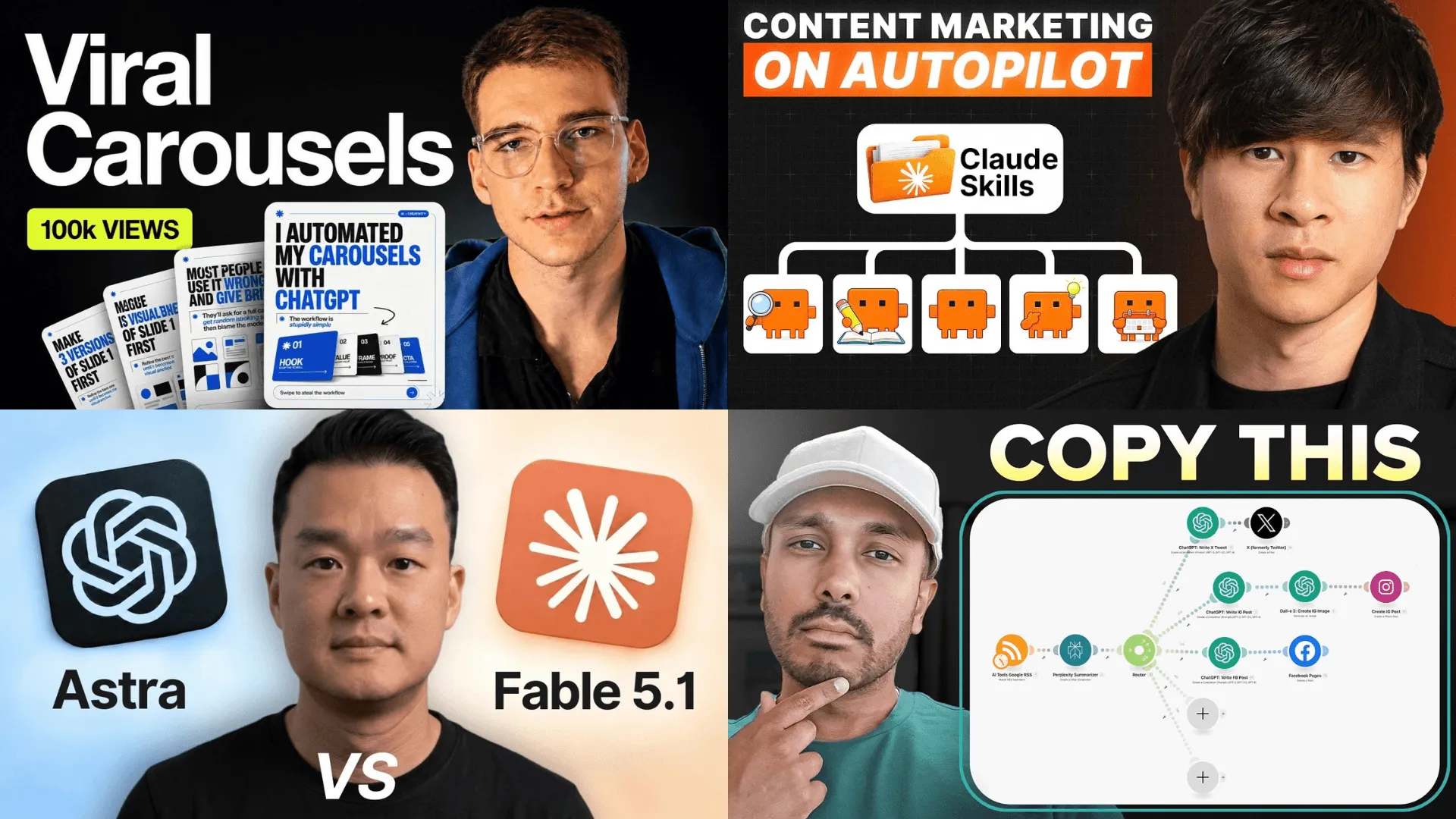
Here are some outlier examples doing really well on YouTube (outlier scores obtained from the vidIQ extension):
- I Made GPT-6 Astra and Fable 5.1 Build the Same App (It’s not even close) - 100.6K views and a 3.8x outlier score.
- How I Use Claude Cowork as a Creative Strategist - 99.1K views and a 4.6x outlier score.
- AI Social Media Automation: How to Post Daily Content 100% on Autopilot! - 192.8K views and a 59.1x outlier score.
- I Created 30 Social Media Posts in 10 Minutes Using Claude Design - 50.2K views and an outlier score above 100x.
- How to Create VIRAL Carousels in ChatGPT (No Coding) - 25K views and 90x outlier score. Important: this was on a channel with less than 600 subscribers.
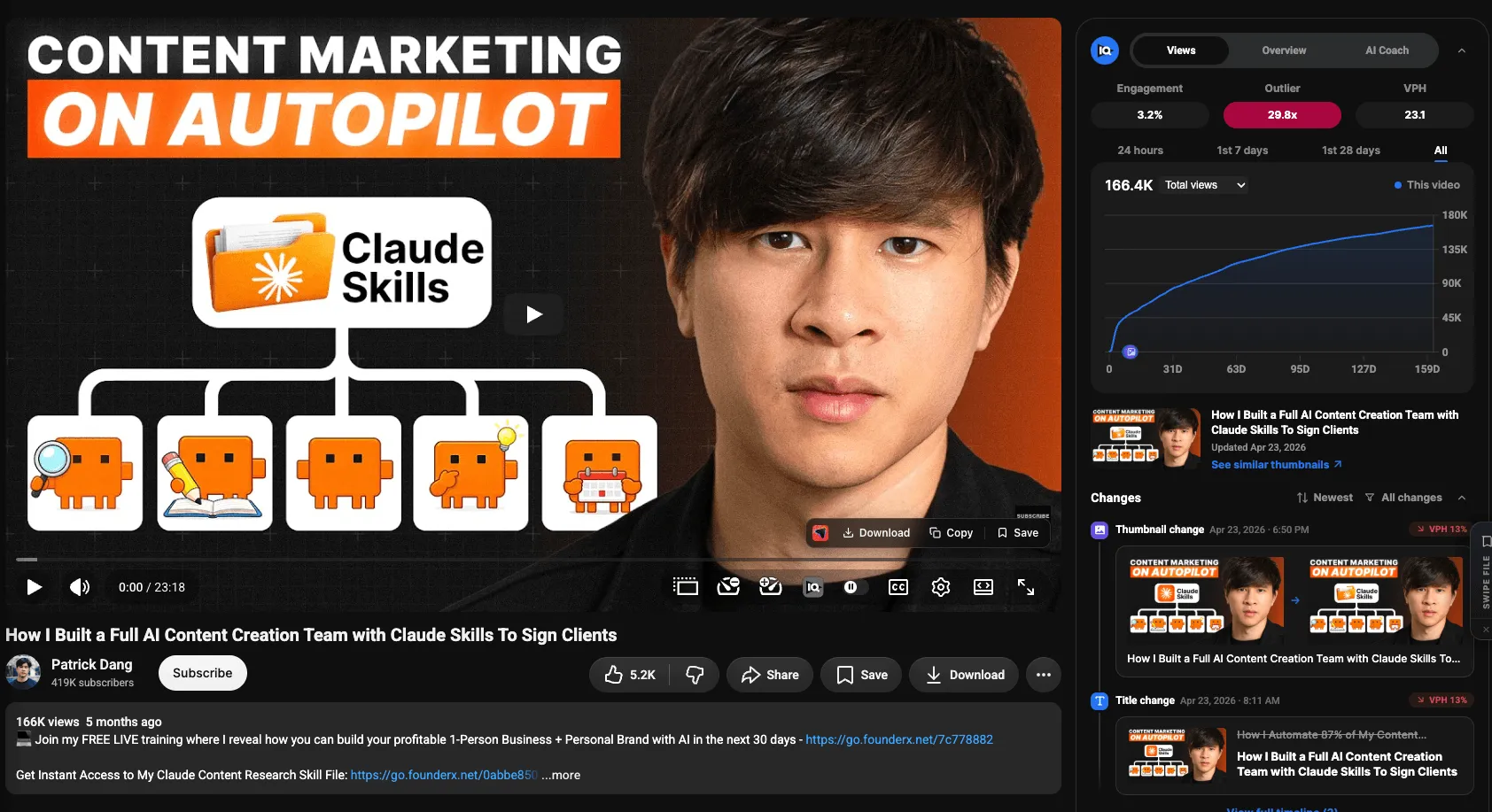
- How I Built a Full AI Content Creation Team with Claude Skills To Sign Clients - 66.4K views and 29.8x outlier.
These popular videos tend to rely on title formulas that could be as simple as How I [action] with [X] to [result] (also known as How I X with Y) or How I [verb] [X] as a [role] (aka. How I X as Y).
But they could also be something more complex like: How I [verb/action] [A] and [B] [action/result] (It’s not even close). This title formula is quite popular right now on YouTube, and it consists of comparing 2 things and adding “it’s not even close” at the end. This creates a curiosity gap, and the person has to click the video to know the answer.
In contrast, I also found examples to avoid:
- Automate Graphics and Images with n8n + Placid.app (No More Canva!): 3.4K views, 2.3x outlier.
- AUTOMATE Pinterest Content Creation with AI & n8n - Step-by-Step (Free Workflow): 12.4K views, 2.2x outlier.
- Watch Me Build A Video Generator With Bannerbear & Google Sheets: 16.3K views.
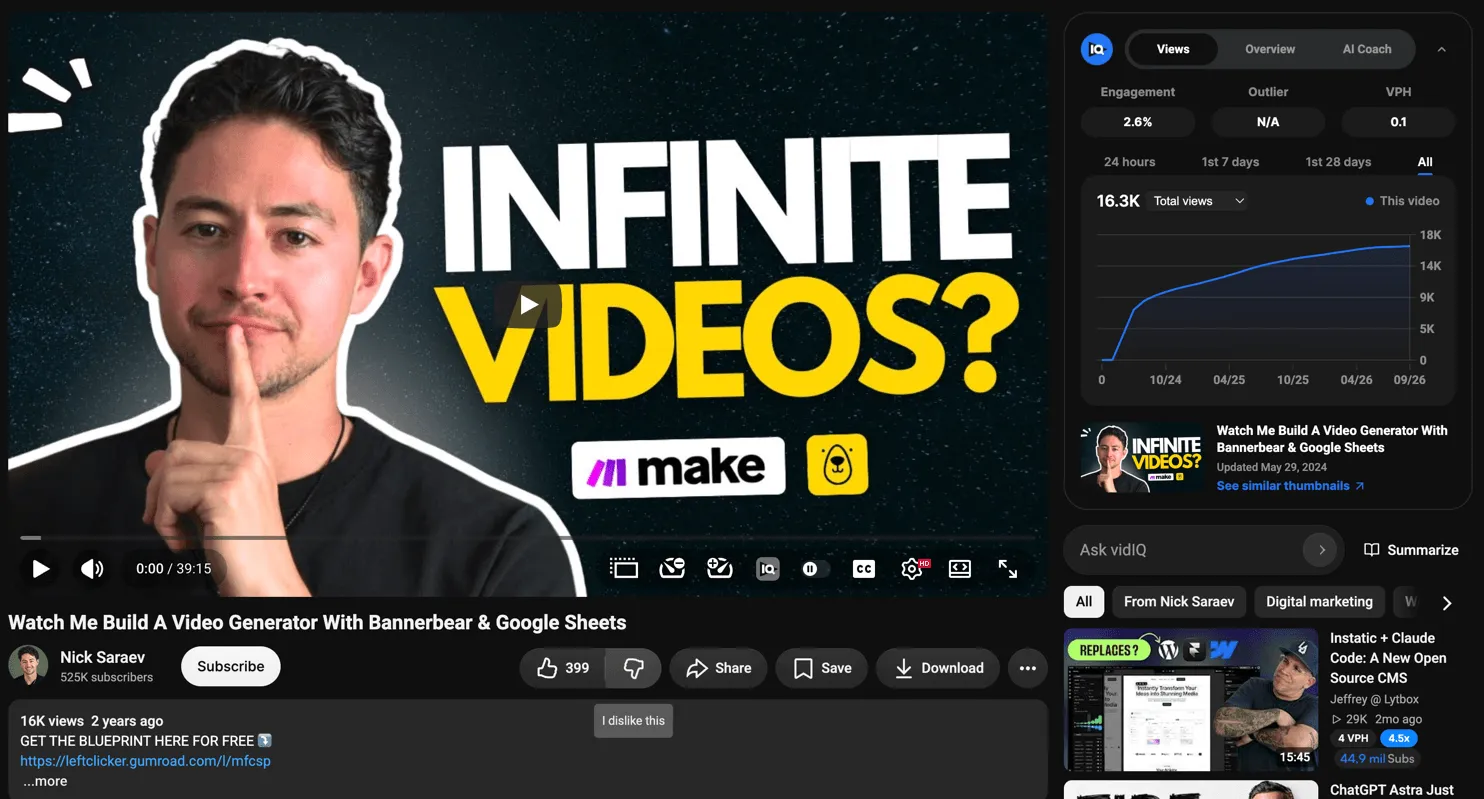
The titles are too keyword/tool focused and probably it hurts the video’s reach. To me, these titles look like they’re targeting search rather than appealing to an emotion.
These examples have way fewer views than several videos about similar topics that crossed 50K or 100K. This doesn’t prove the titles caused the difference, but I’d use the stronger examples as inspiration rather than these.
The main takeaway is that momentum is critical on YouTube. When a format repeatedly produces outliers, that’s a strong signal there’s an audience for that type of video. So I want to lean into what successful channels do and double down on what is working.
Building the content plan
Before I propose the video ideas, I created a list of specific outcomes the ICP probably cares about:
- Keep social content flowing without designing every post manually.
- Adapt a campaign to different channels, sizes, languages, or clients.
- Update product and sale visuals when an offer changes, while keeping the branding consistent.
- Let teammates create variations without changing the approved design.
- Connect their data to visual production, review, and publishing without moving everything manually between tools.
- Turn a new article or episode into promotional visuals without delaying publication.
This is the north star for the content, as we want this audience to actually watch our videos.
In terms of tools, the most important to cover at this moment include: Claude, ChatGPT, Canva, Make, Zapier, n8n, and Bannerbear.
For example, we can show how a workflow changes with a new tool release and compare the results with the previous way of doing it. This follows the hype and lets us make multiple videos about the same topic using a different tool, LLM model, skills, etc.
Another source of juicy ideas are titles that subvert expectations. Instead of only showing how to do something, we could focus on mistakes to avoid when using a tool or workflow. Think of titles like “I Automated Social Media Ads and Almost Got Fired” or “I Built the Perfect Content Workflow. My Team Hated It”.
The audience probably wants to automate social media ads, but the last part of the title creates a curiosity gap that will make them want to watch the video.
You can find 3 examples I picked below to show the direction for the channel using the outliers as inspiration. These are proposed videos and thumbnail mockups, not completed experiments or results. This isn’t a complete content calendar either.
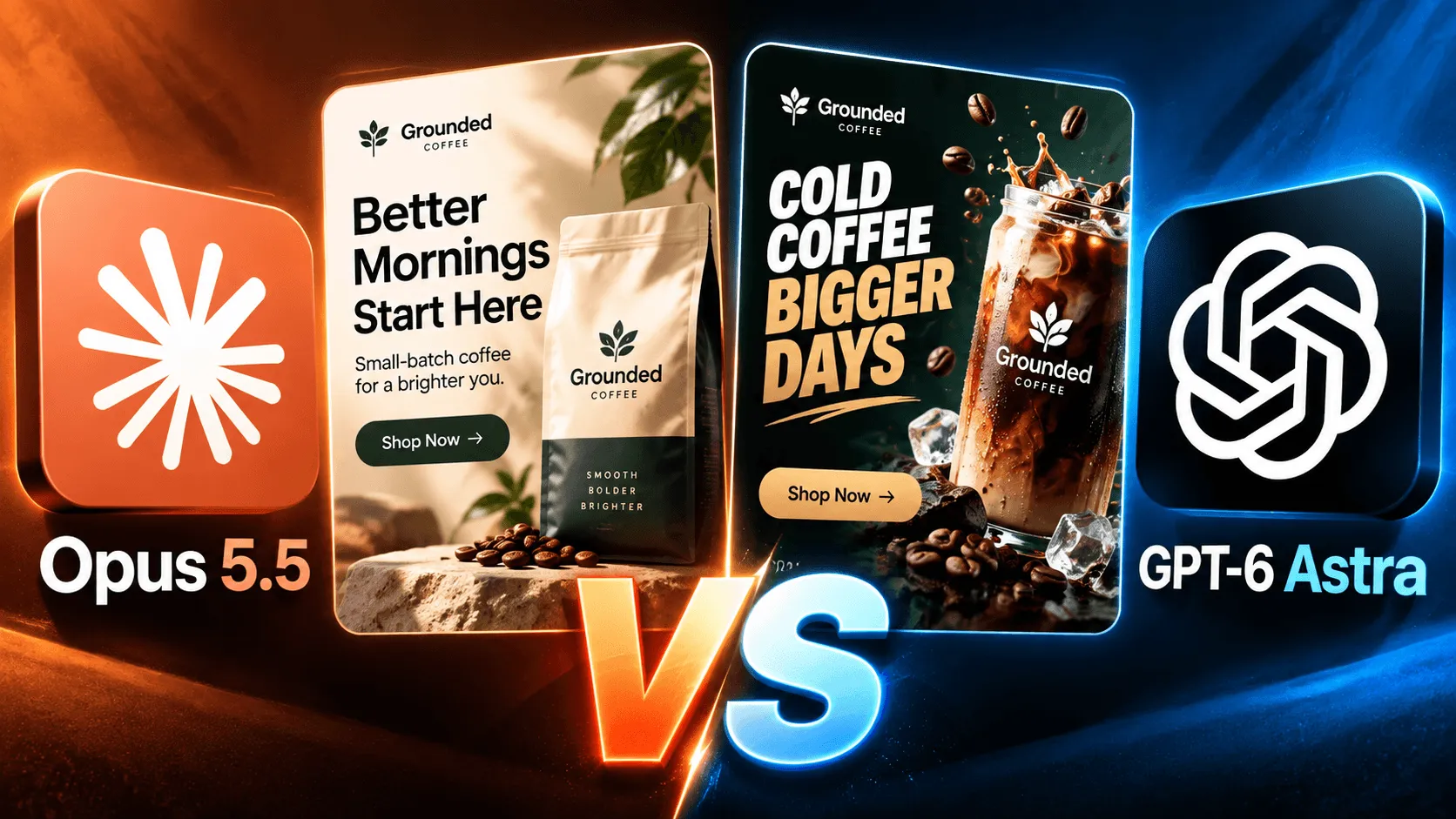
Video suggestion 1: I Used Opus 5.5 and GPT-6 Astra for Instagram Ads (It’s not even close)
Title formula: I [verb] [tool A] and [tool B] [action] (It’s not even close).
This is a very hot title formula right now.
Jason Lee’s “I Made GPT-6 Astra and Fable 5.1 Build the Same App (It’s not even close)”, has 100.6K views and a 3.8x outlier score.
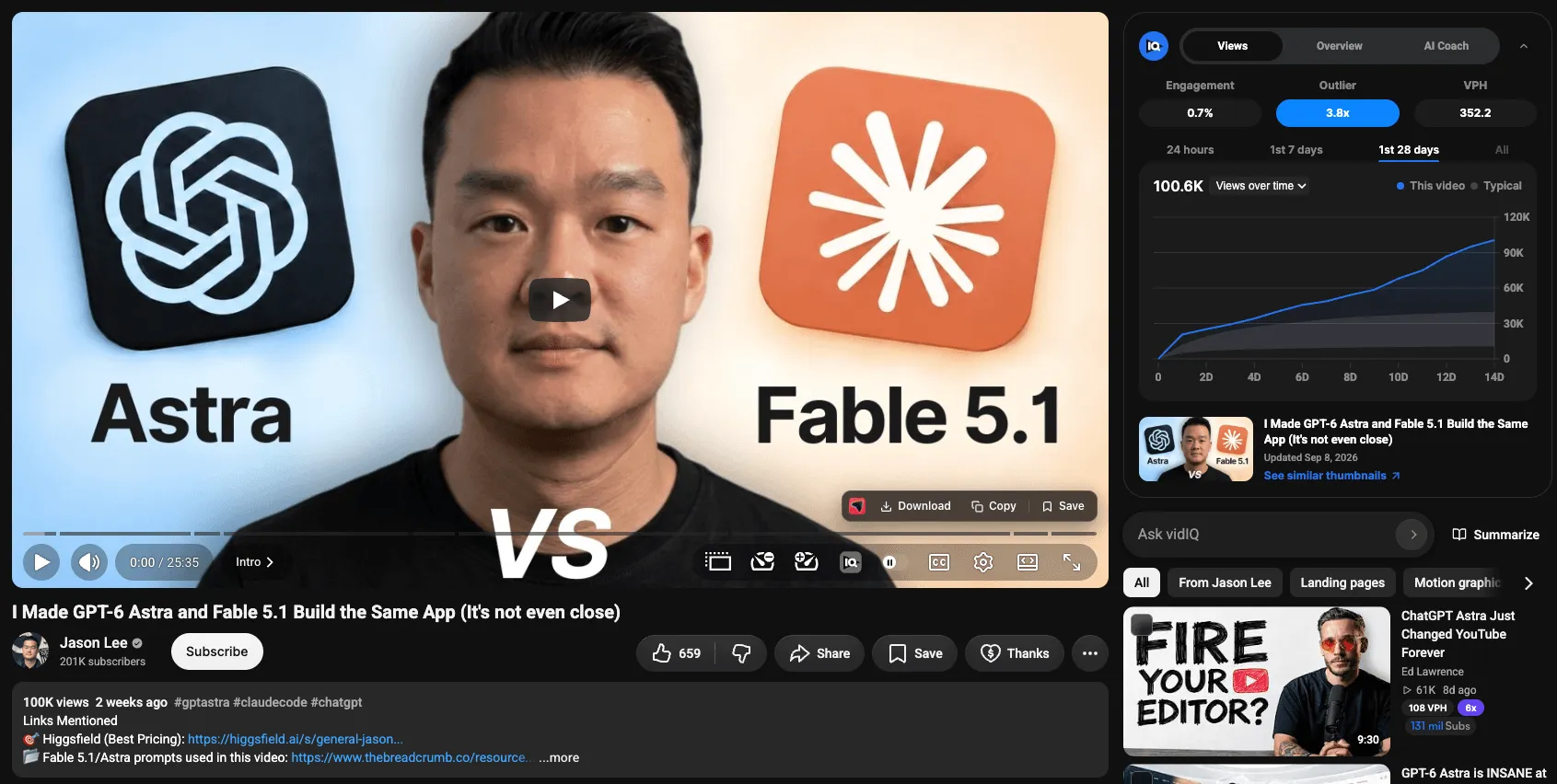
I’d adapt this format to compare the 2 AI tools for making Instagram ads. That gives our ICP something they’re likely interested in, while showing Bannerbear helping achieve the result.
The question for this video would be simple: which one makes better Instagram ads for the same brand?
Here’s my thumbnail proposal: I suggest keeping the big logos and putting ads in the middle.
Video suggestion 2: How I Localize Ads with ChatGPT to Launch Faster
Title formula: How I [action] with [tool] to [result].
For this title, the inspiration is Patrick Dang’s “How I Built a Full AI Content Creation Team with Claude Skills To Sign Clients”, which had 166.4K views and a 29.8x outlier score.
Adapting ads based on location is a use case for Bannerbear and something the ICP may care about (I think).
The idea is to use Bannerbear’s MCP in ChatGPT to generate the ad images. The result we’re aiming to help the viewer achieve is faster production using Bannerbear.
For the thumbnail, I think the big logos could work to give immediate context about the tools involved.
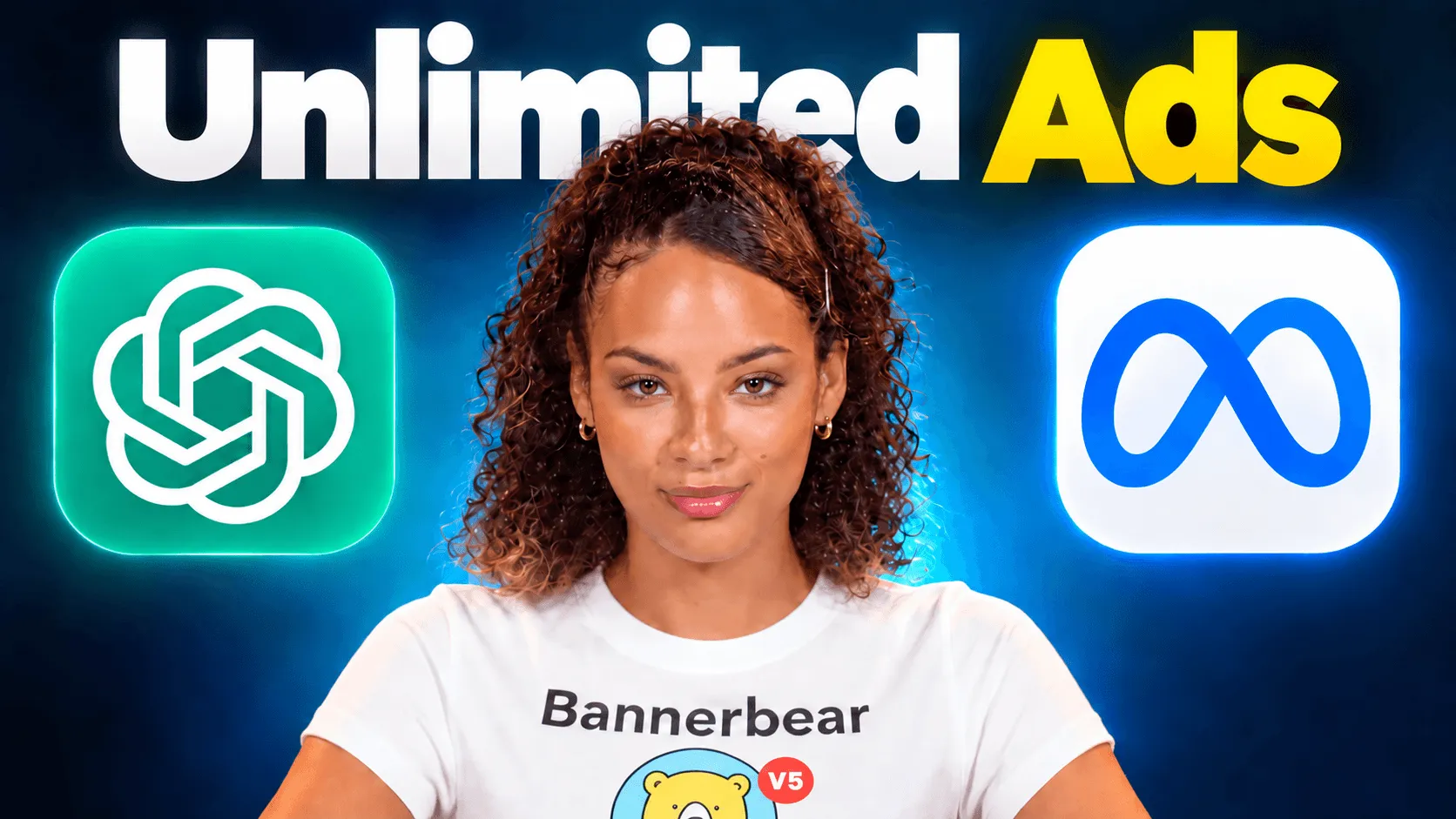
Video suggestion 3: Everything You Need to Know About Automated Ad Creation in 10 Minutes
Title formula: Everything you need to know about [subject] in [number] minutes. Another extremely popular title formula I’ve seen on YouTube.
The video’s premise is to list high-quality tips about a subject in a short amount of time, so the person can know the most important things without a long technical video.
In this example, the idea is to explain the best tips about automated ad creation. Yes, the idea is simple, but it’s effective.
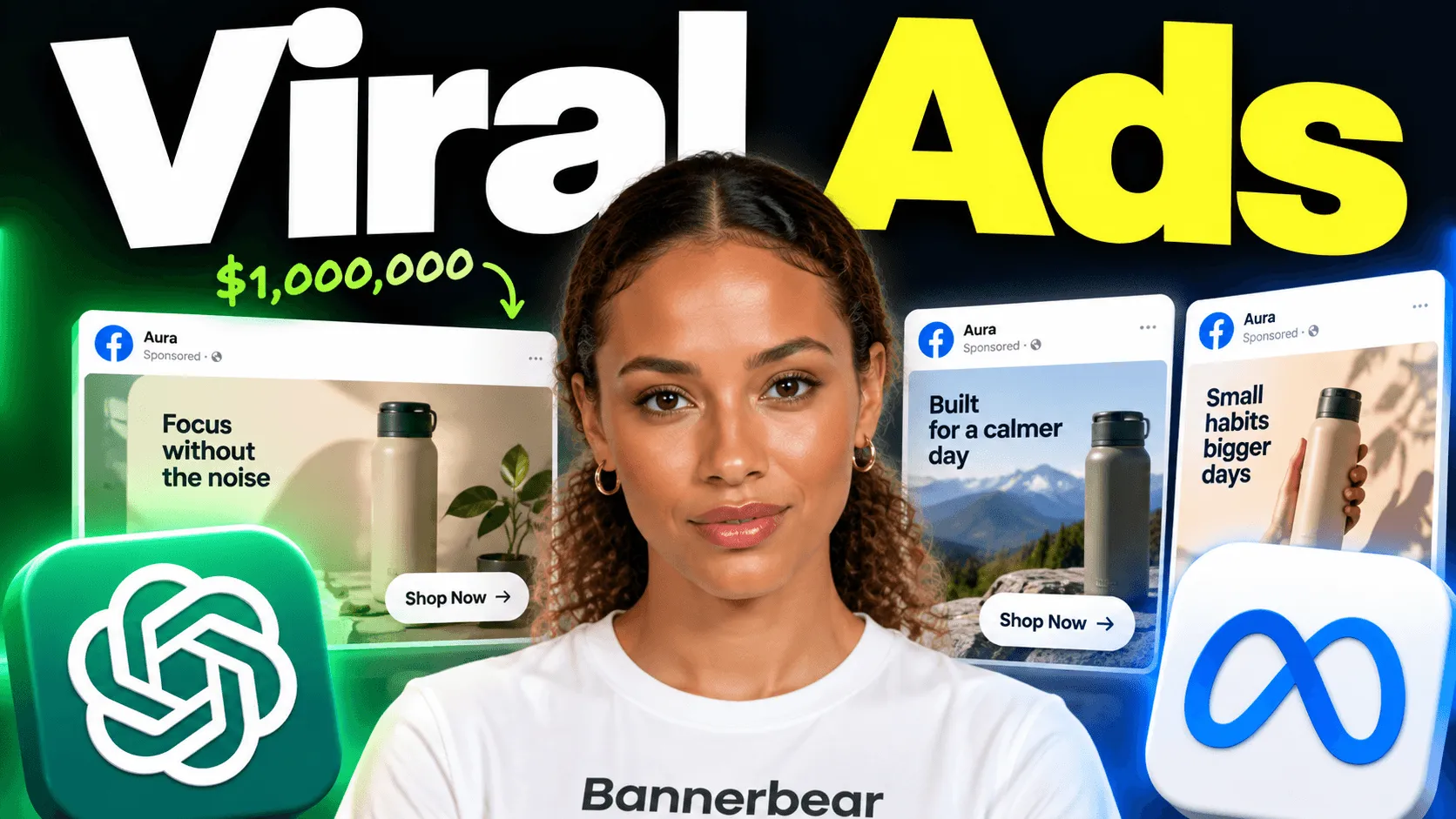
The thumbnail inspiration comes from Artem Novitckii’s How to Create VIRAL Carousels in ChatGPT (No Coding). Although I suspect a thumbnail with fewer logos could beat the current version (but that’s something to A/B test later).
Landing the plane
I’d shift Bannerbear’s current channel toward marketers who need to automate this repetitive visual work, as they are likely an ideal customer for the company.
They have things they need to get done every week, which gives Bannerbear plenty of video ideas beyond teaching product features.
But showing these ideas and doing research is the easy part. The hard part is making videos an audience wants to see over and over again. That’s where I can help.
I can audit and build a strategy to help your business grow and sell with video content.